
- Knowledge is power
- The Future Of Possible
- Hibs and Ross County fans on final
- Tip of the day: That man again
- Hibs and Ross County fans on final
- Spieth in danger of missing cut
While blockchain technology is often praised for its security, it’s not invulnerable. Like any system, blockchains can be susceptible to various types of attacks. Understanding these vulnerabilities is crucial for developers, users, and investors in the cryptocurrency space. This article will explore some of the most common and significant attacks on blockchains, how they work, and what measures can be taken to mitigate them.
1. 51% Attack (Majority Attack)
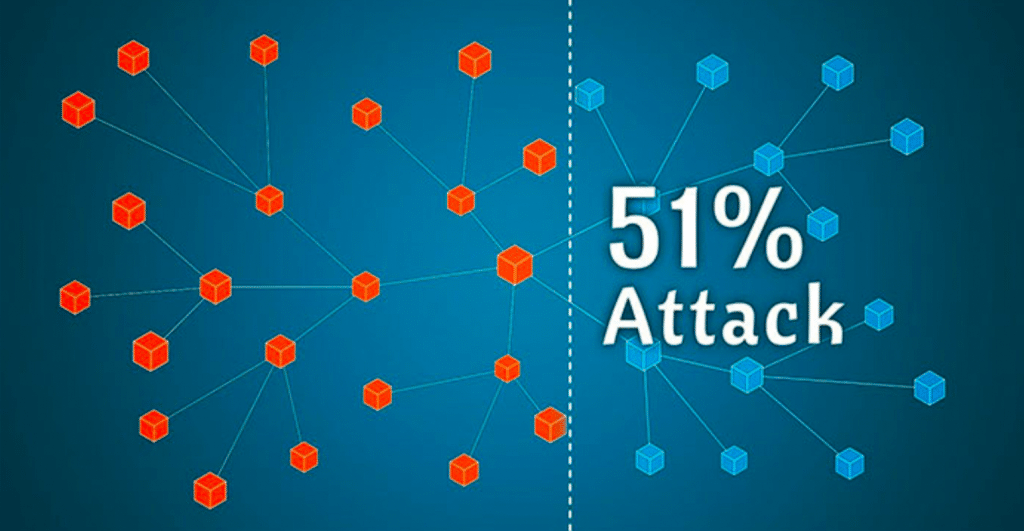
- How it Works: This is the most well-known blockchain attack, primarily applicable to Proof-of-Work (PoW) blockchains. An attacker gains control of more than 50% of the network’s hashing power (computational power).
- What the Attacker Can Do:
- Double-Spend Coins: The attacker can spend coins, then reverse the transaction after it has been confirmed, effectively spending the same coins twice.
- Censor Transactions: The attacker can prevent specific transactions from being confirmed.
- Reorganize the Blockchain: The attacker can rewrite recent blocks, potentially reversing transactions that were previously considered final.
- Mitigation:
- Large, Decentralized Networks: The larger and more decentralized a PoW blockchain is, the more expensive and difficult it becomes to amass 51% of the hashing power.
- Alternative Consensus Mechanisms: Proof-of-Stake (PoS) and other consensus mechanisms are less susceptible to 51% attacks, as they rely on different security models.
2. Sybil Attack
- How it Works: An attacker creates a large number of fake identities (nodes) on the network to gain influence and potentially disrupt consensus. This doesn’t necessarily require controlling 51% of the hashing power (in PoW) or stake (in PoS), but rather controlling a large number of nodes.
- What the Attacker Can Do:
- Influence Voting: In systems with voting mechanisms (e.g., Delegated Proof-of-Stake), the attacker can sway votes in their favor.
- Block Transactions: The attacker can refuse to relay or validate transactions from specific users.
- Disrupt Network Operations: The attacker can flood the network with fake transactions or disrupt communication between honest nodes.
- Mitigation:
- Identity Verification: Requiring some form of identity verification or reputation system can make it more difficult to create fake identities.
- Proof-of-Stake (with Slashing): In PoS, validators have a financial stake in the network’s integrity. Malicious behavior can result in the loss of their staked coins (slashing), disincentivizing Sybil attacks.
- Resource-Based Limits: Limiting the influence of individual nodes based on factors like bandwidth or storage capacity.
3. Double-Spend Attack
- How it Works: An attacker spends cryptocurrency in one transaction, then attempts to reverse that transaction before it’s fully confirmed on the blockchain. This can be achieved through various techniques, including 51% attacks, race attacks, and Finney attacks.
- Race Attack: The attacker sends two conflicting transactions almost at the same time. One transaction to a merchant, and the other one to themselves.
- Finney Attack: The attacker mines a block containing a transaction to themself, but keep the block private. Then he sends the cryptocurrency to a merchant, and releases the private block, thus invalidating the merchant’s transaction.
- What the Attacker Can Do:
- Defraud Merchants: Obtain goods or services without actually paying for them.
- Undermine Trust: Damage the credibility of the cryptocurrency.
- Mitigation:
- Waiting for Confirmations: Merchants should wait for a sufficient number of confirmations (blocks added to the chain after the transaction) before considering a transaction final. The more confirmations, the harder it is to reverse a transaction.
- Fast Confirmation Times: Blockchains with faster confirmation times are less vulnerable to certain types of double-spend attacks.
4. Smart Contract Exploits
- How it Works: Smart contracts are self-executing contracts stored on the blockchain. Bugs or vulnerabilities in the smart contract code can be exploited by attackers.
- What the Attacker Can Do:
- Steal Funds: Drain funds from the smart contract.
- Manipulate Contract Logic: Alter the behavior of the contract to their advantage.
- Disrupt Decentralized Applications (dApps): Cause dApps built on the smart contract to malfunction.
- Mitigation:
- Formal Verification: Using mathematical methods to prove the correctness of smart contract code.
- Audits: Having independent security experts review the code for vulnerabilities.
- Bug Bounties: Offering rewards to developers who find and report vulnerabilities.
- Careful Coding Practices: Following secure coding best practices.
5. Routing Attacks (BGP Hijacking)

- How it Works: An attacker manipulates internet routing protocols (specifically, the Border Gateway Protocol – BGP) to intercept or reroute network traffic intended for blockchain nodes.
- What the Attacker Can Do:
- Isolate Nodes: Prevent nodes from communicating with the rest of the network.
- Launch Double-Spend Attacks: By controlling the flow of information, the attacker can increase the chances of successfully double-spending coins.
- Partition the Network: Split the network into separate, non-communicating parts.
- Mitigation:
- Network Monitoring: Monitoring network traffic for suspicious routing changes.
- Redundant Connections: Using multiple internet service providers and redundant network connections.
- Cryptographic Authentication: Using cryptographic signatures to verify the authenticity of routing information.
6. Timejacking Attack
- How it works: Attacker manipulates the timestamp of blocks.
- What the Attacker can do: Increase their chances of mining a block.
- Mitigation: Restricting the acceptable timestamp range and using multiple peers for time synchronization.
7. Eclipse Attack
- How it works: An attacker monopolizes all connections to/from a victim node, controlling the victim’s view of the blockchain.
- What the Attacker can do: Persuade the victim that a payment has been made when it hasn’t.
- Mitigation: Ensure random peer selection and allow multiple inbound/outbound connections.
8. Long Range Attack
- How It Works: Specific to Proof-of-Stake blockchains. An attacker creates a fork of the blockchain starting from the genesis block, potentially rewriting the entire history. This is possible if the attacker acquires the private keys associated with the initial stakes in the genesis block (or a very early block).
- What the Attacker Can Do: Rewrite the blockchain history, potentially double-spending coins or altering past transactions.
- Mitigation:
- Key Management: Secure and responsible management of private keys, especially those associated with early stakes.
- Checkpointing: Regularly establishing checkpoints in the blockchain history that cannot be easily rewritten.
- Stakeholder consensus
Conclusion: Staying Vigilant in the Decentralized World
While blockchain technology offers significant security advantages, it’s essential to be aware of the potential attacks and vulnerabilities. No system is entirely immune to threats, and the decentralized nature of blockchain presents unique challenges. By understanding these attacks and implementing appropriate mitigation strategies, developers, users, and businesses can help ensure the continued security and reliability of blockchain networks. Continuous vigilance, ongoing research, and proactive security measures are crucial for navigating the evolving landscape of blockchain security.