
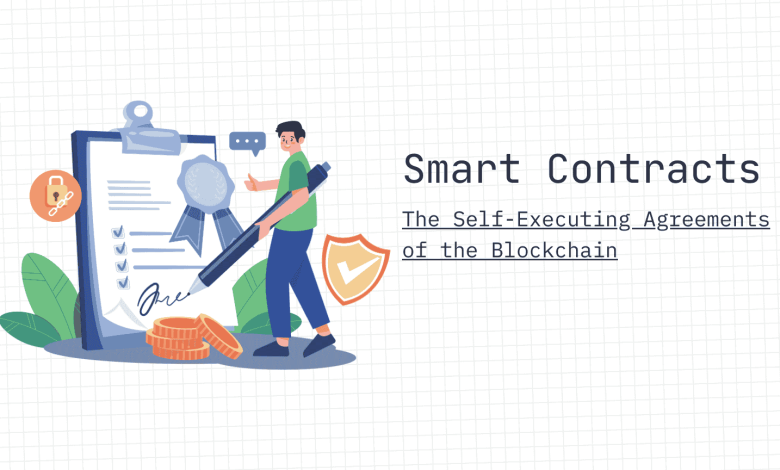
Smart contracts are a revolutionary concept that extends the functionality of blockchain technology beyond simple cryptocurrency transactions. They are self-executing contracts, written in code, that automatically enforce the terms of an agreement between parties. This article will explain what smart contracts are, how they work, their benefits and limitations, and their potential to transform various industries.
What is a Smart Contract?
A smart contract is essentially a computer program stored on a blockchain. It contains a set of rules, defined in code, that automatically execute when specific conditions are met. There is no need for a central authority or intermediary to enforce the contract; the blockchain itself ensures its execution.
Think of it like a vending machine:
- Predefined Rules: The vending machine has predefined rules: you insert money, select an item, and the machine dispenses the product.
- Automatic Execution: The machine automatically executes the transaction when the conditions (payment and selection) are met.
- No Intermediary: You don’t need a salesperson to mediate the transaction.
Smart contracts operate similarly, but on a blockchain, with the rules and execution being transparent, immutable, and verifiable by all participants.
How Do Smart Contracts Work?
- Code Creation: Developers write the smart contract code in a programming language like Solidity (for Ethereum), Vyper, or others, depending on the blockchain platform. The code defines the terms of the agreement, including the conditions that must be met and the actions that will be taken when those conditions are met.
- Deployment to Blockchain: The smart contract code is deployed to the blockchain. This creates a unique address for the contract on the blockchain, and the code becomes immutable (cannot be changed).
- Triggering Conditions: External events or transactions trigger the smart contract. These triggers could be:
- Payment: Receiving a certain amount of cryptocurrency.
- Time: A specific date or time being reached.
- Data Input: Receiving specific data from an external source (an “oracle”).
- Another Smart Contract Calling a function on this smart contract.
- Execution: When the triggering conditions are met, the smart contract code automatically executes. This might involve:
- Transferring Funds: Sending cryptocurrency to a specific address.
- Updating Data: Changing the state of the contract or other data on the blockchain.
- Triggering Other Actions: Interacting with other smart contracts or external systems.
- Verification and Recording: The execution of the smart contract is verified by the nodes on the blockchain and recorded permanently on the ledger.
Key Features of Smart Contracts
- Self-Executing: They automatically execute when predefined conditions are met.
- Immutable: Once deployed, the code cannot be changed (in most cases).
- Transparent: The code and transaction history are publicly visible on the blockchain (although the identities of the parties involved may be pseudonymous).
- Trustless: No need to trust a central authority or intermediary.
- Deterministic: The outcome of the contract is predictable and determined by the code.
Benefits of Smart Contracts
- Automation: Automate complex processes, reducing the need for manual intervention.
- Efficiency: Reduce operational costs and speed up transaction times.
- Security: The immutable and distributed nature of blockchain makes smart contracts highly secure.
- Transparency: All terms and conditions are publicly visible and verifiable.
- Reduced Trust Requirements: Parties don’t need to trust each other; they only need to trust the code.
- Elimination of Intermediaries: Reduce reliance on third-party intermediaries, such as banks, lawyers, or escrow services.
Limitations and Challenges of Smart Contracts
- Immutability (Can Be a Double-Edged Sword): While immutability provides security, it also means that bugs or vulnerabilities in the code cannot be easily fixed after deployment.
- Complexity: Writing secure and reliable smart contracts can be complex and requires specialized programming skills.
- Scalability: The underlying blockchain’s scalability limitations can affect the performance of smart contracts.
- Legal Uncertainty: The legal status of smart contracts is still evolving in many jurisdictions.
- Oracle Problem: Smart contracts often rely on external data sources (“oracles”) to trigger their execution. The reliability and security of these oracles are crucial.
- Gas Fees: Smart contracts cost resources to execute, and these fees can be significant.
Applications of Smart Contracts
Smart contracts have a wide range of potential applications across various industries:
- Decentralized Finance (DeFi): Lending, borrowing, trading, and other financial services without intermediaries.
- Supply Chain Management: Tracking goods, verifying authenticity, and automating payments.
- Voting Systems: Creating secure and transparent voting platforms.
- Digital Identity: Managing digital identities and verifying credentials.
- Gaming: Creating in-game economies and enabling true ownership of digital assets.
- Insurance: Automating claims processing and payouts.
- Real Estate: Streamlining property transactions and managing rental agreements.
- Intellectual Property Managing copyrights.
Examples of Smart Contract Platforms
- Ethereum: The most popular platform for building and deploying smart contracts.
- Solana: A high-performance blockchain designed for scalability.
- Cardano: A blockchain platform focused on security and sustainability.
- Binance Smart Chain: A blockchain platform developed by Binance.
- Polkadot: A multi-chain platform that allows different blockchains to interoperate.
- Avalanche
- TRON
Conclusion: Smart Contracts – The Future of Agreements
Smart contracts represent a significant step forward in the evolution of digital agreements. Their ability to automate processes, reduce costs, increase transparency, and eliminate the need for intermediaries has the potential to transform numerous industries. While challenges remain, the ongoing development and adoption of smart contracts are paving the way for a more efficient, secure, and trustless future. As the technology matures and legal frameworks adapt, we can expect to see even more innovative applications of smart contracts emerge, reshaping the way we interact and transact in the digital world.